Continuous Flow
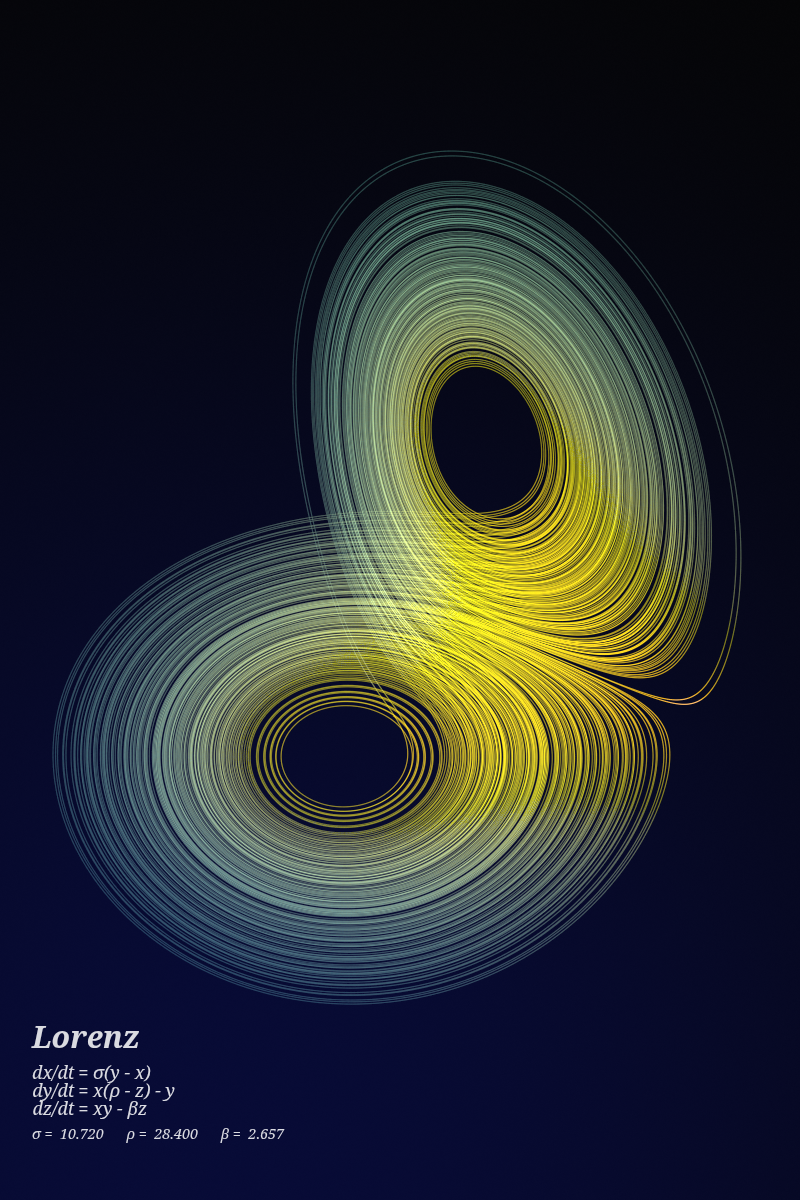
Lorenz Attractor
FeaturedEdward Lorenz (1963)
The foundational icon of chaos theory, exhibiting the famous butterfly wings born from simplified atmospheric convection.
Explore the mathematical archetypes of chaos theory — from classical atmospheric convection flows and non-linear oscillators to discrete fractal maps and infinite polynomial parameter spaces.
Edward Lorenz (1963)
The foundational icon of chaos theory, exhibiting the famous butterfly wings born from simplified atmospheric convection.
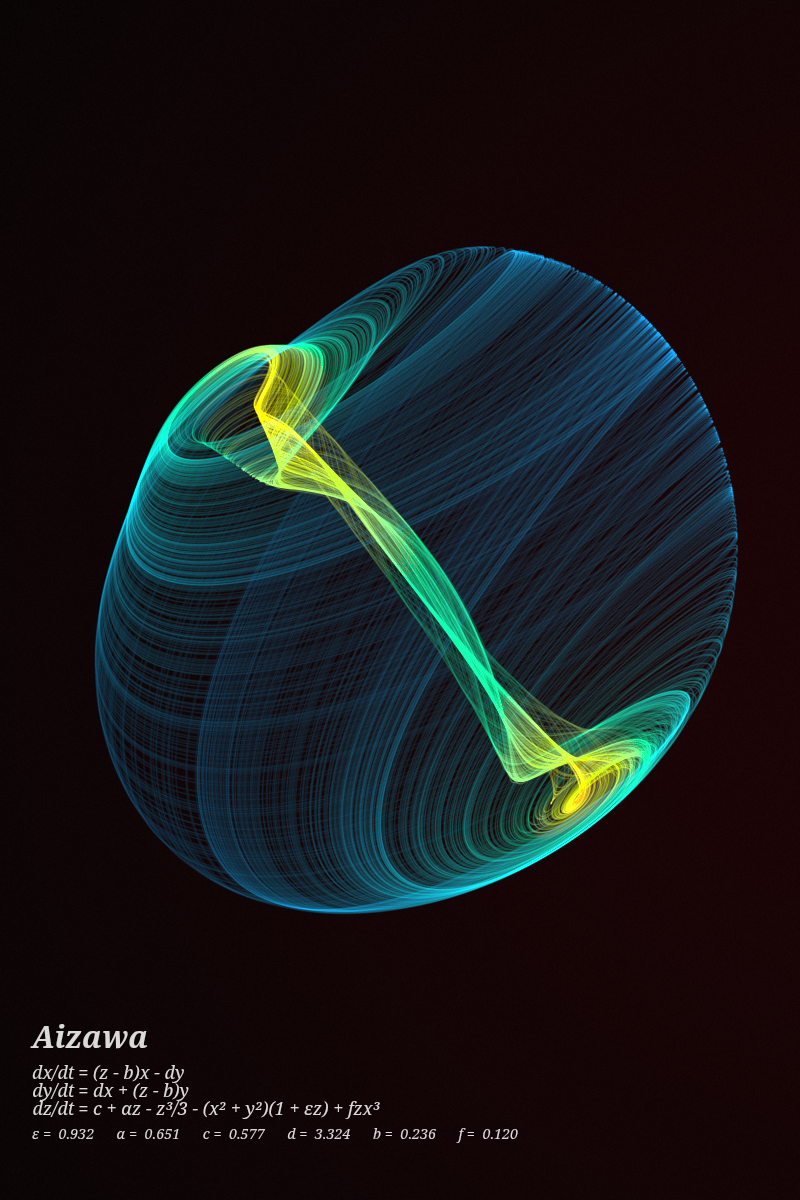
Yoji Aizawa (1980)
A breathtaking spherical shell featuring a twisting central vortex and delicate chaotic sheet inversions.
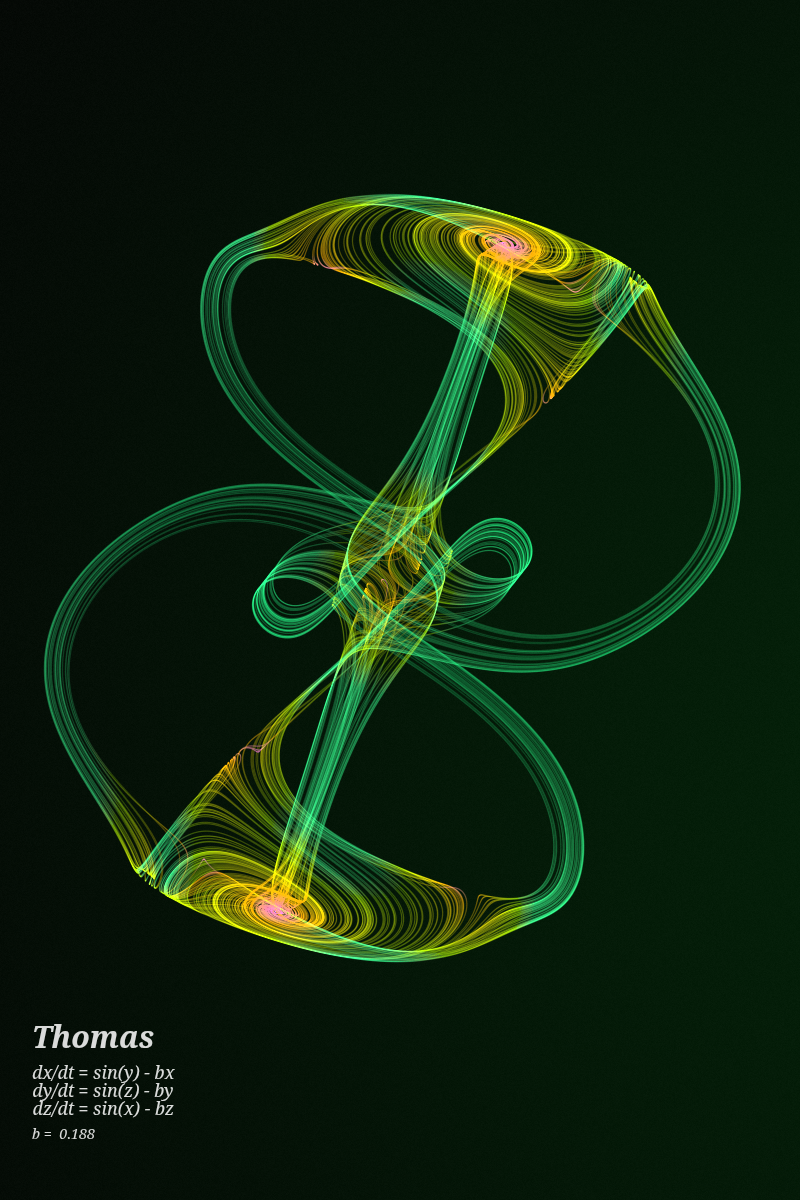
René Thomas (1999)
A mesmerizing, endlessly winding labyrinth with threefold cyclic symmetry and sine non-linearities.
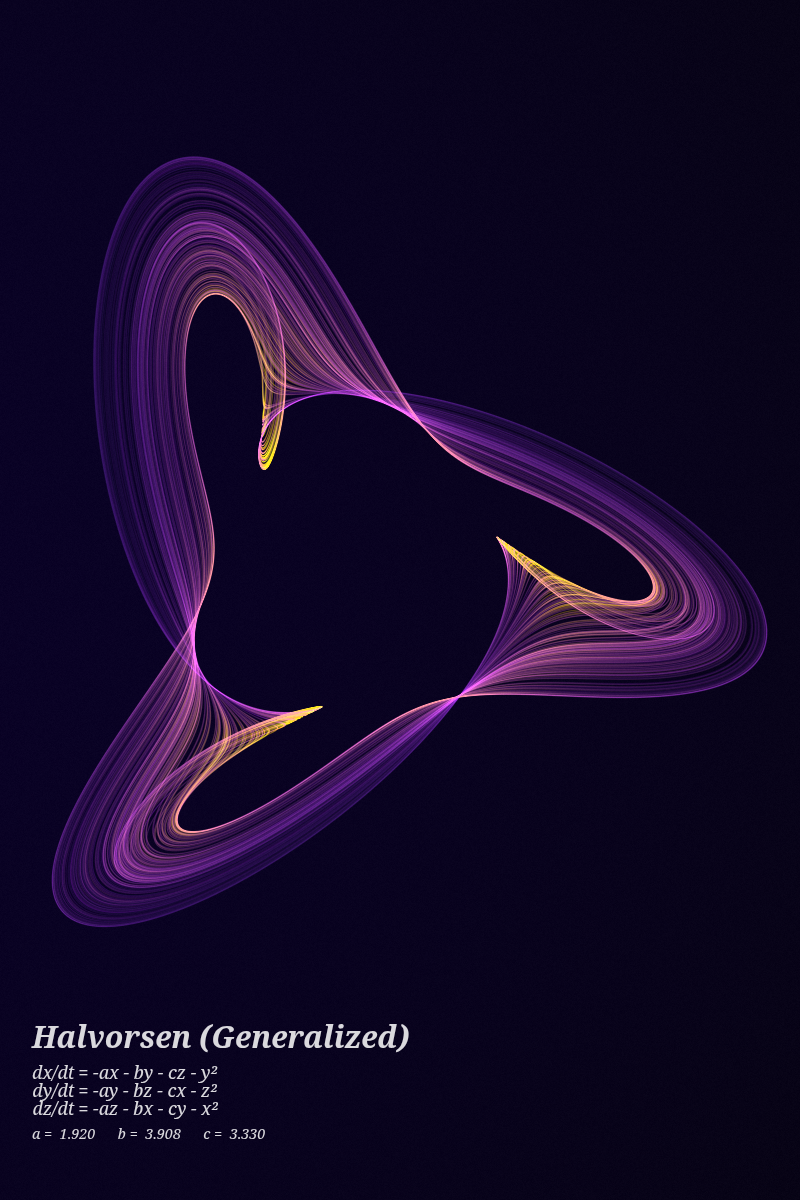
Christoffer Halvorsen (1990)
A striking, tri-lobed trefoil knot exhibiting rotational symmetry and violent cyclic sheet transitions.
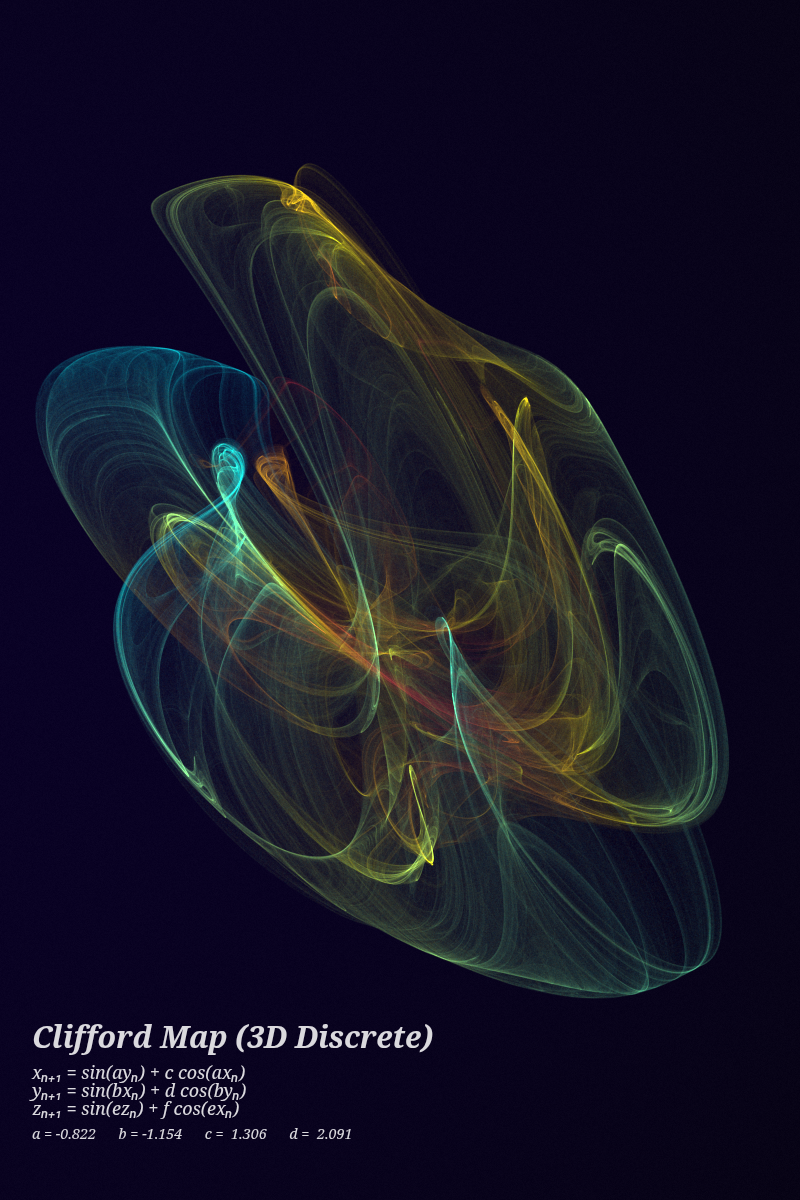
Clifford A. Pickover (1988)
Gossamer smoke sheets, fractal drapery, and shimmering volumetric folds generated by iterated trigonometric recurrence relations.
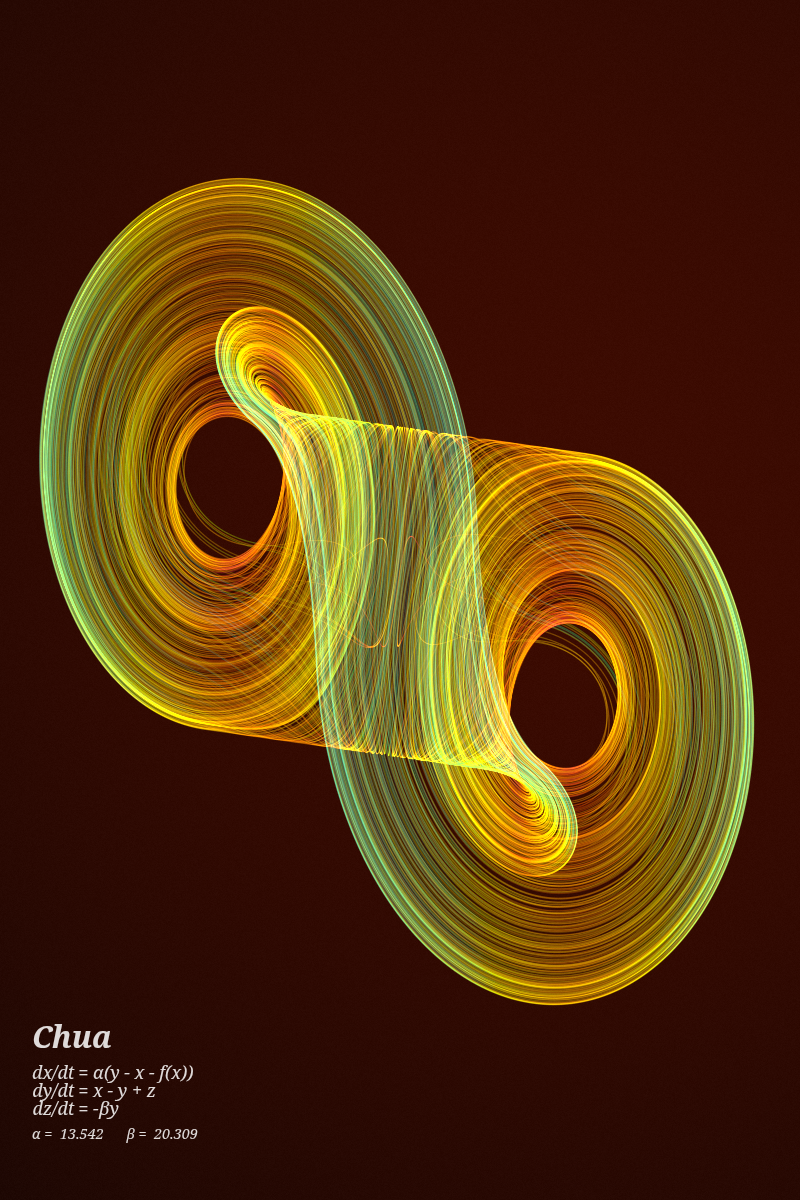
Leon O. Chua (1983)
The celebrated double-scroll chaotic attractor born from the simplest non-linear electronic oscillator circuit.
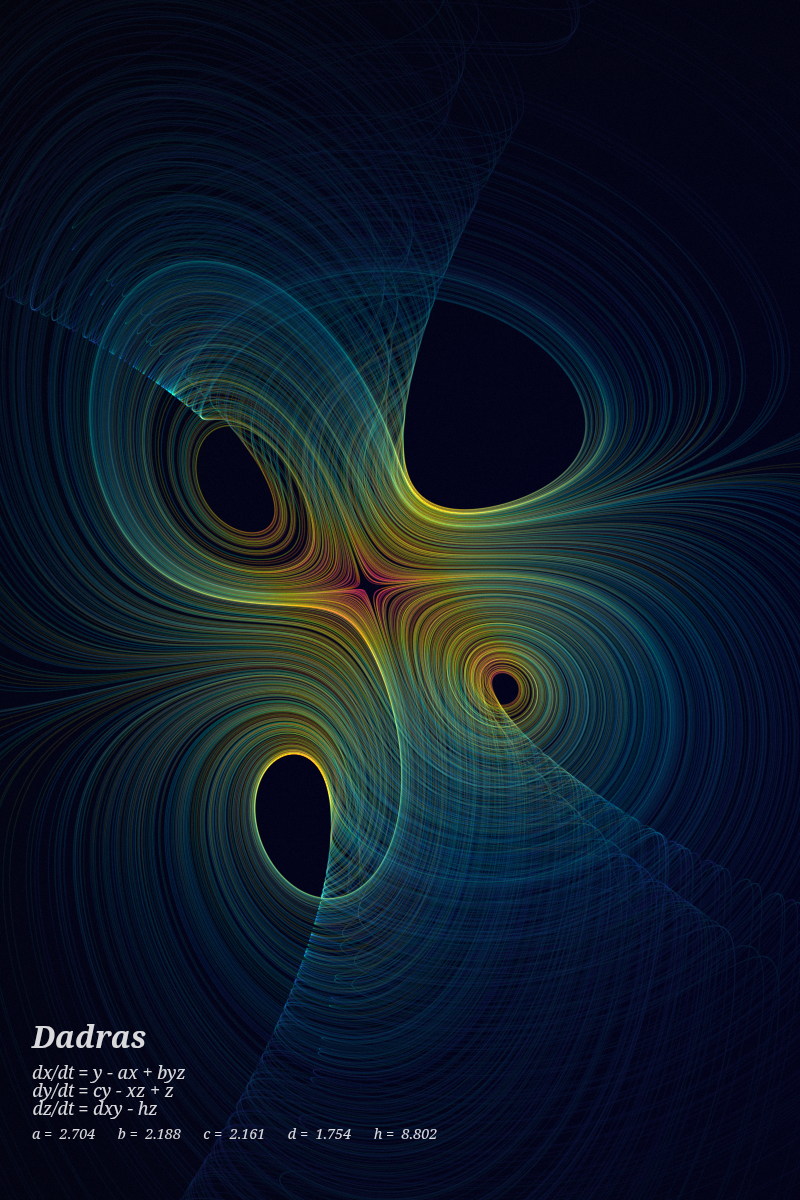
Sara Dadras & Hamid Reza Momeni (2009)
A modern autonomous 3D chaotic system producing wide, multi-wing helical loops and complex spiral bifurcations.
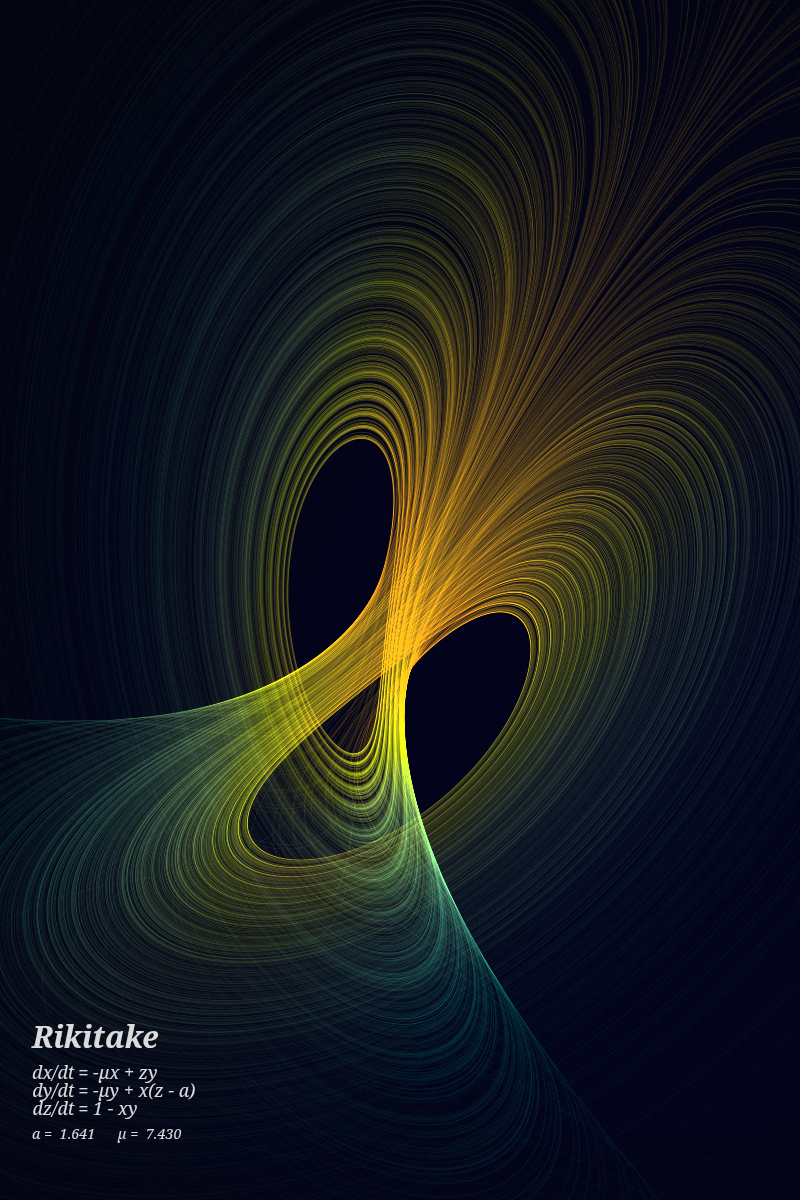
Tsuneji Rikitake (1958)
Modeling the chaotic magnetic field reversals of planet Earth using coupled rotating conductive dynamos.
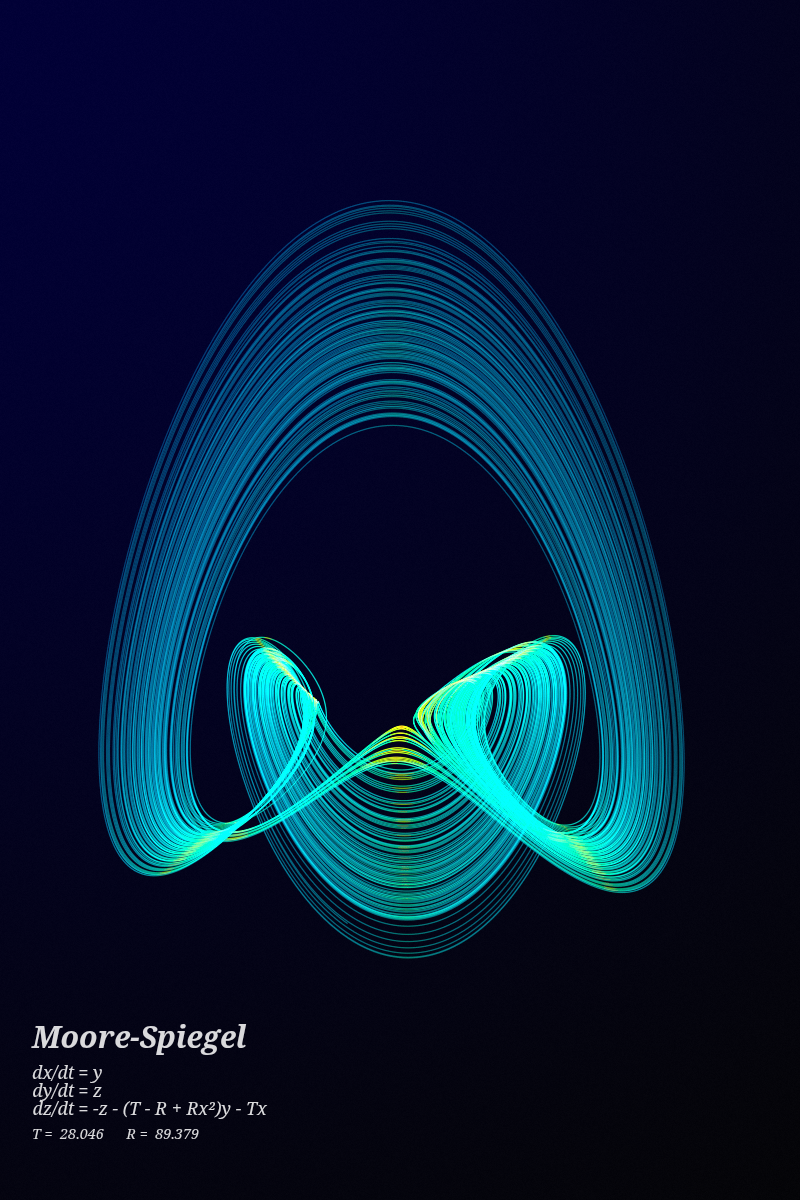
D.W. Moore & Edward A. Spiegel (1966)
Pulsating stellar envelopes and chaotic convection waves occurring in variable giant stars.
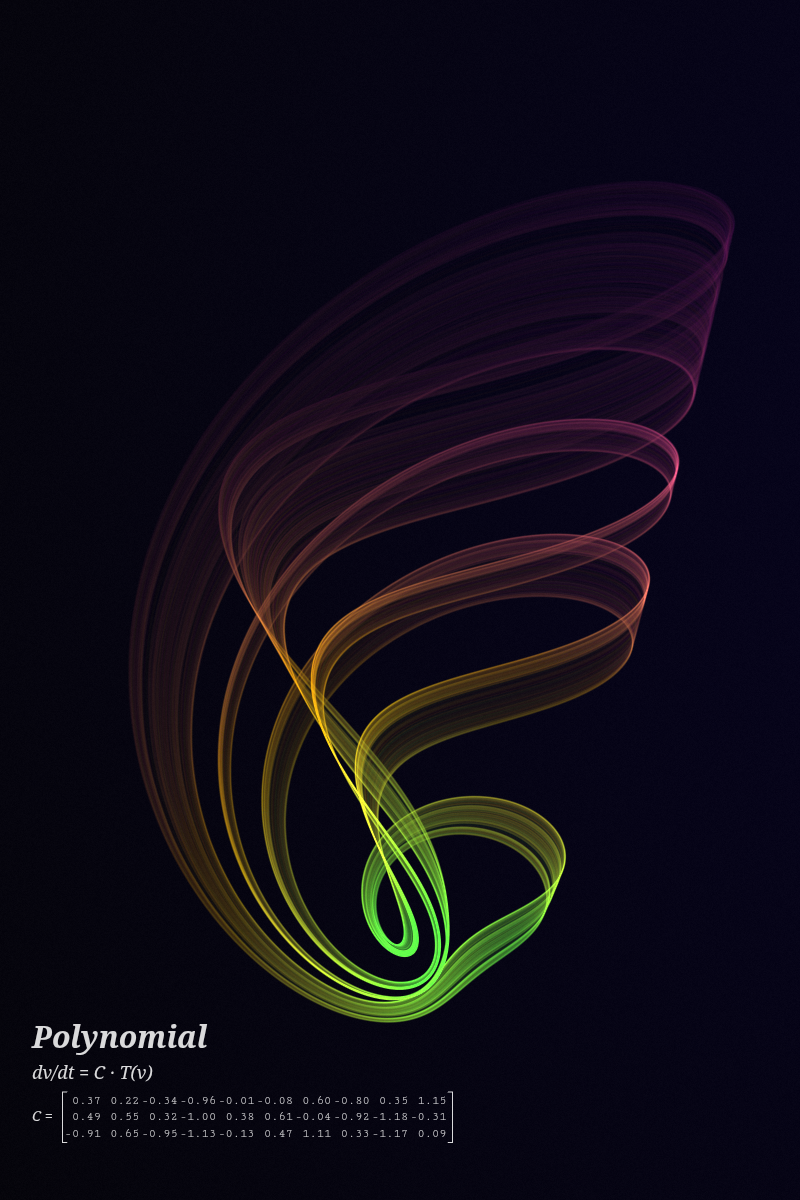
Julien Clinton Sprott (1993)
An infinite universe of 3D chaotic forms mined from a 30-dimensional parameter space of quadratic differential equations.
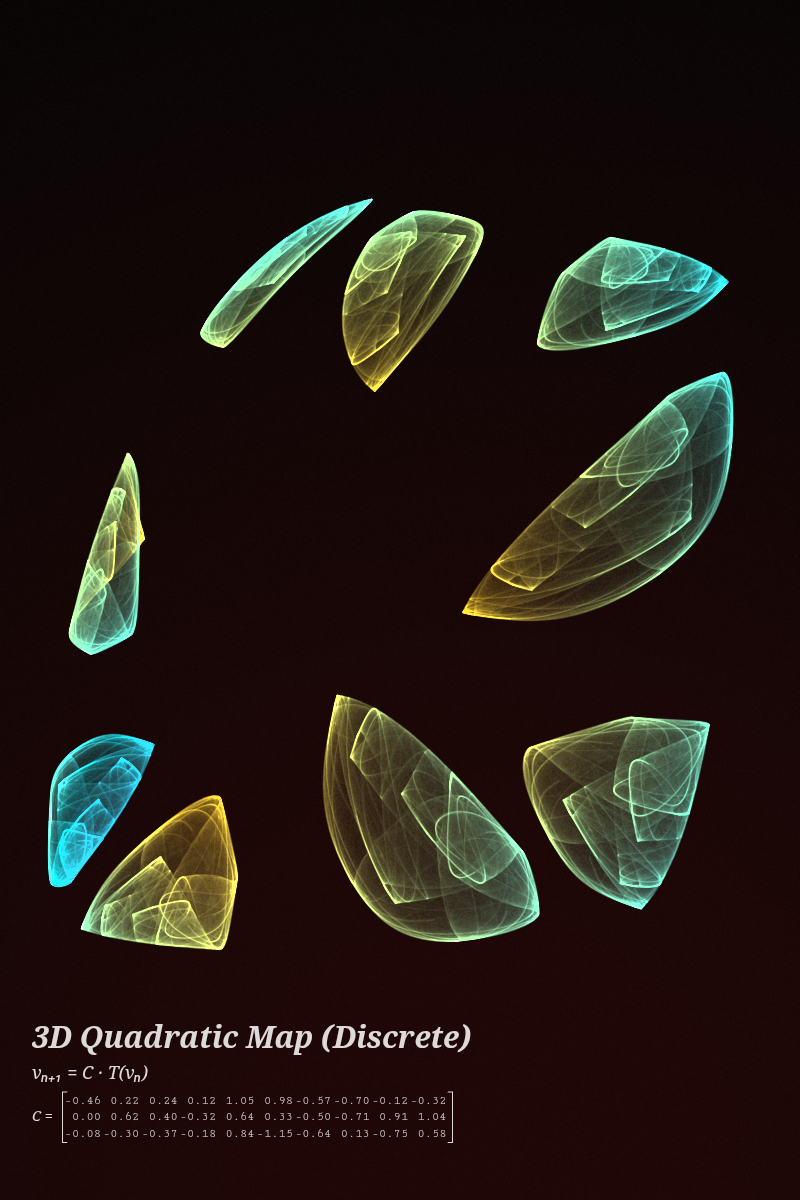
J.C. Sprott & Chaos Explorers (1993)
Crumpled gossamer membranes and multi-sheet fractal sheets generated by iterative 3D quadratic mappings.
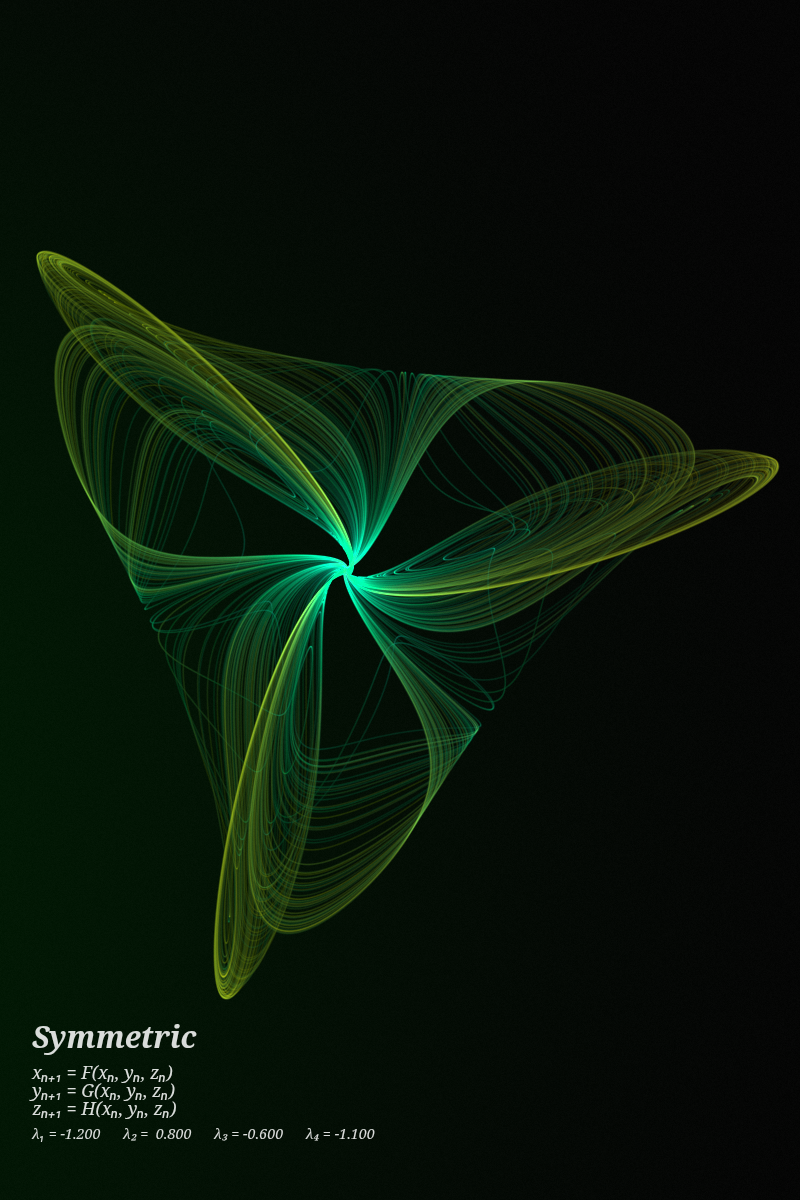
Michael Field & Martin Golubitsky (1992)
High-order spatial symmetry groups fused with chaotic dynamics, creating crystalline mandala-like fractal forms.
Our real-time WebGL visualizer scans millions of random equations per second to discover never-before-seen strange attractors.
Launch Attractor Miner